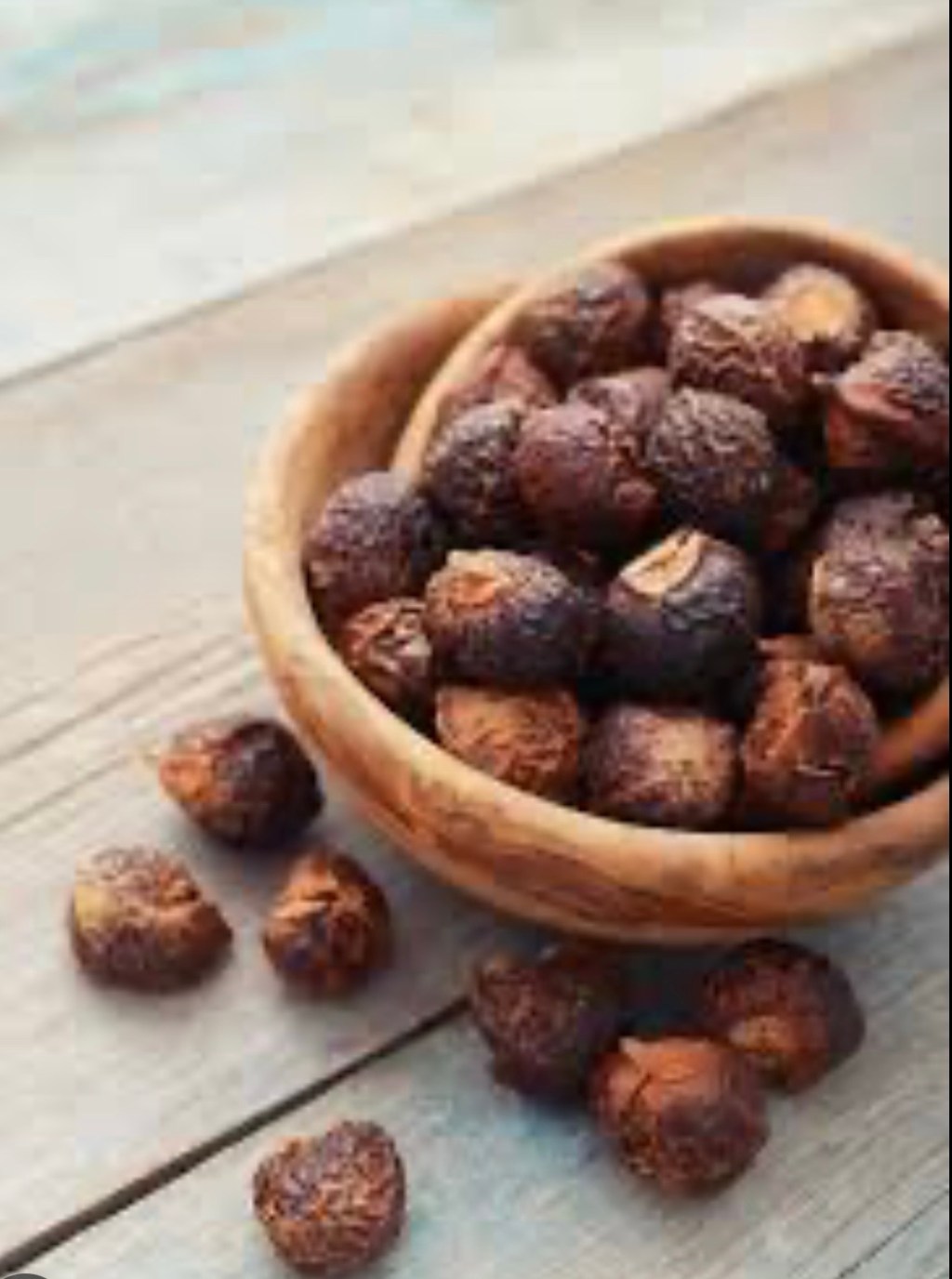
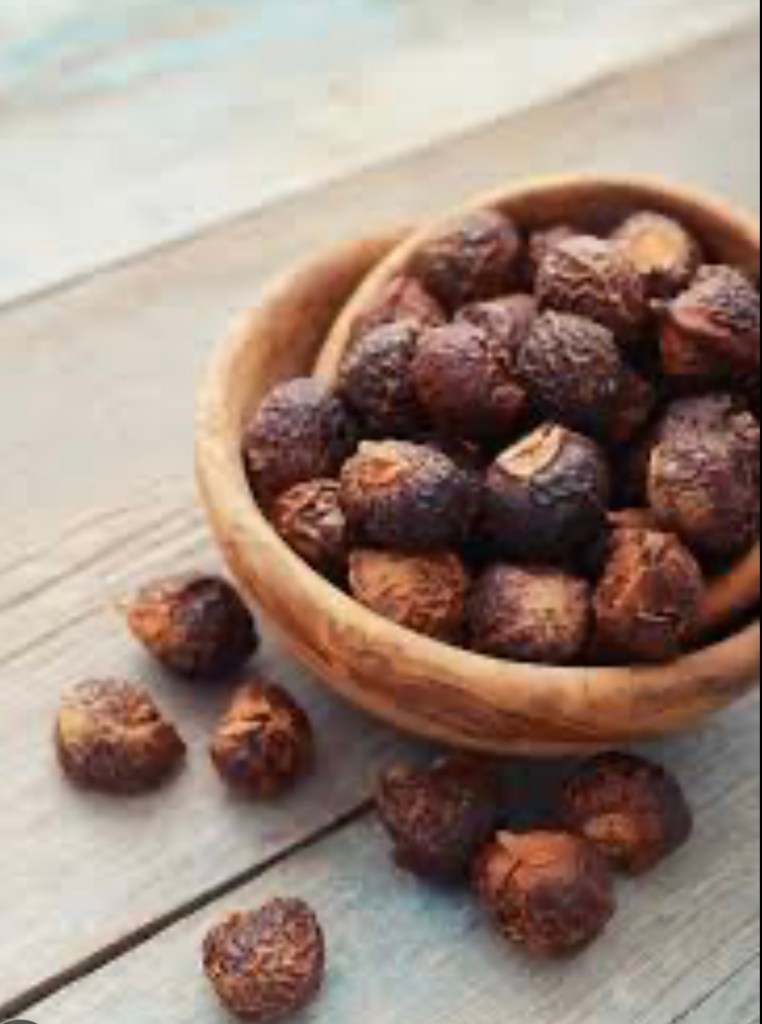
Browsing a host of “natural” shampoo bottles and cleaning agents and I see “Sapindus mukorossi peel extract” listed as an ingredient. Through some research, turns out it’s the official name for a soap nut extract! As per usual curiosity got the best of me! I like to research and be aware! Call me crunchy if you will!
So here’s a few things worth noting about this incredible, natural ingredient.
Contrary to their name, soap nuts aren’t nuts at all. They’re actually fruit or berries. The functional ingredient in soap nuts is found in the dried shells – or husks – of the fruit of the ‘Sapindus mukorossi’ a tree native to India and Nepal.
Sapindus is a genus of about five to twelve species of shrubs and small trees in the lychee family, Sapindaceae, native to warm temperate to tropical regions of the world. The genus includes both deciduous and evergreen species. Members of the genus are commonly known as soapberries[3] or soapnuts because the fruit pulp is used to make soap. The generic name is derived from the Latin words sapo, meaning “soap”, and indicus, meaning “of India“.[4]Sapindus (reference: Wikipedia)
I have read that Soap nuts contain natural surfactants called saponins. These ingredients turn into bubbles when you add water and give them a stir.
Saponins are – you guessed it! – 100% natural and biodegradable, making them a great choice as a gentle, natural cleanser that doesn’t contaminate our water supplies.
Do these work?
Soap nuts have historically been used for bathing and shampooing in areas where the plants are native. They have also become a greener way to do laundry and or make cleaning products here in the states!
Historically the whole fruit or extracts from the husks were used by people to keep themselves clean. Continue reading or check out some articles to learn more about these natural powerhouses!
You can test soap nuts for yourself. You’ll find them online and at some bulk food and health food stores. Simply stick the nuts in a container of hot water (with a lid!) and let them soak.
After a few minutes, the saponins will seep into the water and foam quickly with a shake. How cool is that!
I have read that the most popular way to use these nuts are for a laundry alternative. However people also rave about them as a shampoo.
This gentle, hypoallergenic, and biodegradable alternative to chemical-laden detergents is not only kind to your skin but also to the environment.
Only use deseeded soap shells, because the seed itself can stain fabric!
How are they used?
Instructions:
- Put 4 to 6 organic soap nut shells in a cotton muslin bag.
- Ensure the bag is closed nice and tight.
- Put your clothes and the muslin bag in the washer.
- Wash as normal.
You can reuse the same soapnuts for 3 washing loads and you can stretch it to 4 if you wash using cold water. Don’t forget to compost them when they’ve been used up.
I’ve also read*
For a cold water wash, they work best if you put them in a cup of hot water for a few minutes first to begin releasing the saponin. You also don’t need fabric softener or dryer sheets with soap nuts.
Also if you notice that your whites aren’t as white as with common detergents add some baking soda to brighten them up!
My wet clothes coming out of the washer smelled slightly of apple cider. Once dried they just smelled clean. I also use wool balls,often with essential oil in my dryer!
How do you store these nuts?
Soap nuts basically have an endless shelf life if properly stored. It’s recommended that you store unused nuts in an air tight container. They should be stored in a cool dry, dark location away from direct sunlight. Most laundry rooms are the perfect location!
How much do they cost?
Good news is, they are even available on Amazon and most health food stores.
Mountain Rose Herbs for 1lbs $10.50
Amazon 1lbs $23.99
I realize these would be much more convenient if we could grow them ourselves! I will definitely be looking into that possibility. Not only do we live everyday with millions of harmful chemicals being ingested or consumed through our skin but we also use too many plastic products that are harmful to our environment. I’m always on the look out for less harmful ways!
No matter how you begin your path to greener living the road is endless!
Drop me a comment if you also use a greener laundry detergent, I would love to hear about it!
 Backroads mom
Leave a comment